
Remote Monitoring & Support
Identify issues before they become outages and protect revenue at scale.
Proactive Visibility That Protects Uptime
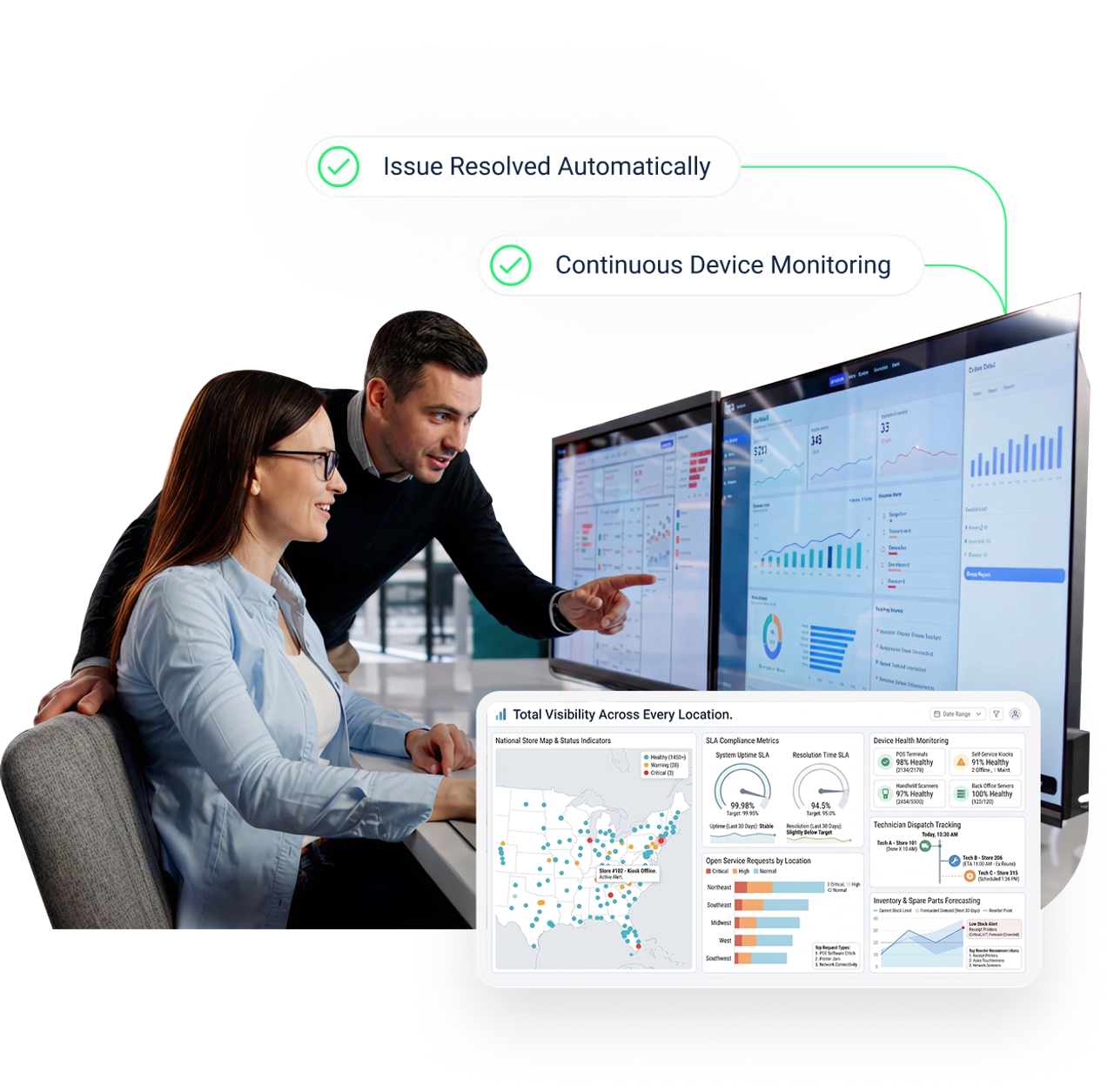
Remote Monitoring at Spencer extends lifecycle management into real-time operational oversight. Instead of waiting for a store associate to report that a system is down, devices are continuously monitored for health, performance, and configuration integrity.
Across POS systems, kiosks, kitchen display systems, networking equipment, and digital infrastructure, Spencer tracks uptime, resource utilization, software state, and connectivity. When thresholds are met, automated workflows respond immediately — self-healing where possible, escalating when necessary.
The objective is simple: identify issues before they become outages and protect revenue at scale.
Continuous Monitoring, Automated Response
Spencer provides 24/7 device health monitoring that captures conditions most teams would never see in real time — rising CPU utilization, disk space saturation, offline ports, policy drift, disconnected peripherals, or failed services.
When defined thresholds are met, structured workflows execute automatically. A device may reboot. A policy may reapply. A port may reset. If remediation fails, a ticket is generated or a dispatch is triggered based on the customer's defined escalation model.
Issues are addressed faster because they are identified earlier.
Configurable by Device, Defined by Business Priority
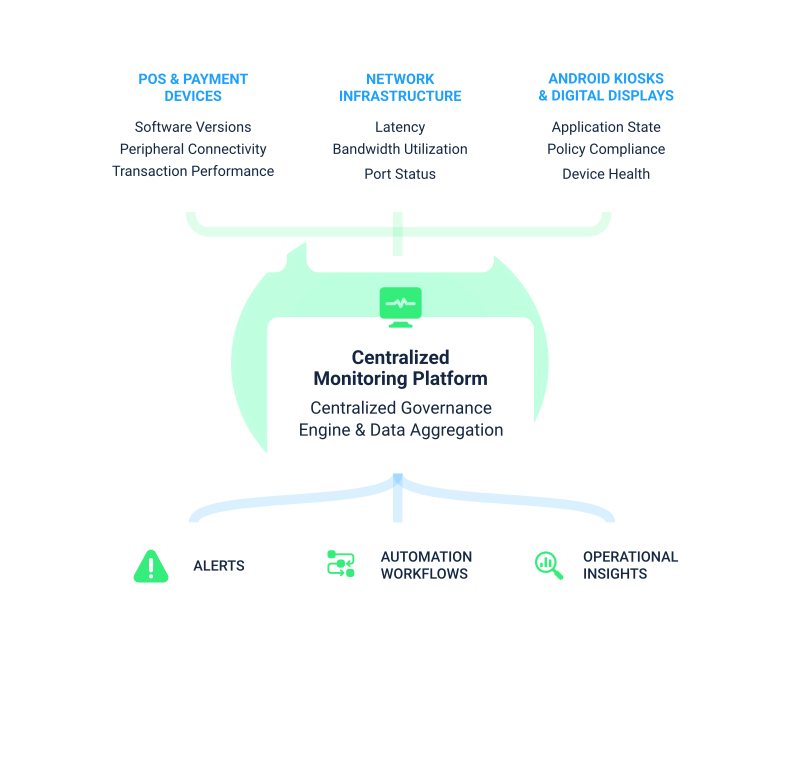
Remote Monitoring is not one-size-fits-all. Monitoring parameters, response logic, and visibility levels are configured by device type and business impact.
Network equipment can be monitored for latency, uptime, and port utilization. POS systems can be tracked for software version compliance, peripheral status, and performance metrics. Android-based kiosks and displays can be monitored for policy enforcement, application state, and hardware health.
Dashboards provide enterprise-level visibility with the ability to drill into location-level and device-level detail. Reporting spans operational health, event history, SLA tracking, and performance trends. Customers receive as much or as little visibility as their governance model requires.
From Alerts to Insight.
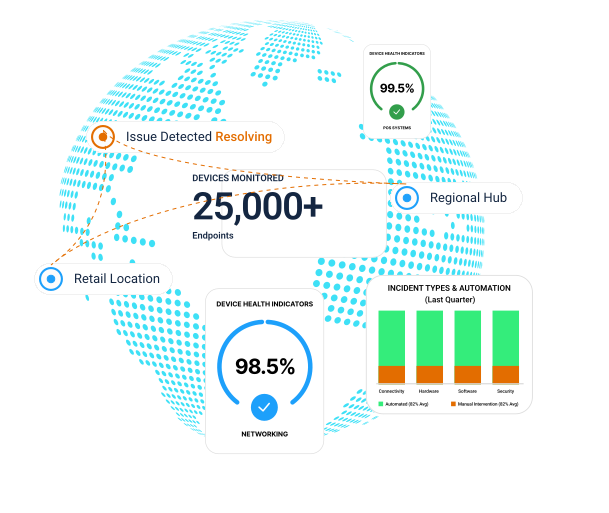
Monitoring is not only about responding to incidents. It is about learning from them.
Aggregated data reveals patterns across device models, software releases, and environmental conditions. Performance trends can highlight aging hardware, compatibility challenges, or configuration inconsistencies before failure rates rise. Spencer uses this data to inform lifecycle planning, recommend refresh timing, and identify preventative actions that reduce systemic risk.
Because Spencer operates across thousands of multi-site environments, we recognize trends beyond a single fleet. That cross-environment perspective strengthens decision-making and improves long-term stability.
Built for Multi-Site Retail at Scale
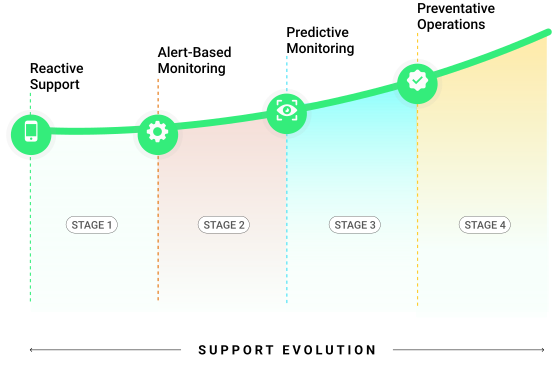
Retail and QSR environments are complex by nature. Manufacturers vary. Configurations differ. Conditions change daily.
Spencer simplifies that complexity through structured monitoring, integrated automation, and coordinated service workflows. Whether supporting a single corporate environment or tens of thousands of distributed locations, customers gain a centralized view of infrastructure health in one place.
- YOU SEE WHAT MATTERS.
- YOU DRILL DOWN WHEN NEEDED.
- YOU RELY ON DEFINED AUTOMATION AND EXPERIENCED OPERATORS TO HANDLE THE REST.
Remote Monitoring at Spencer is not just oversight. It is proactive control across the full technology lifecycle.
Remote Monitoring at Spencer is not just oversight. It is proactive control across the full technology lifecycle.

Take Control of Uptime
Get real-time visibility, faster resolution, and proactive support across every location.