
Self-Service Kiosks
Extending the point of sale to the customer for ordering, checkout, and loyalty.
The Business Problem
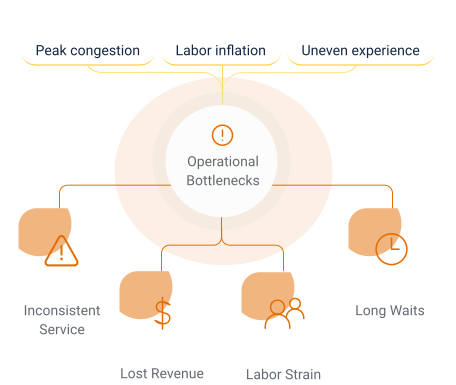
Retailers and restaurant operators continue to face rising labor costs, inconsistent customer experiences, and peak hour congestion that limits revenue during the moments that matter most.
Traditional staffed checkout and ordering models cannot scale efficiently during rush periods, and adding labor is no longer a reliable way to improve throughput. At the same time, customers have become comfortable with self-service experiences across airports, retail, banking, and quick service restaurants.
The strategic question is no longer whether self-service should exist in the store, but how to deploy it in a way that increases throughput, improves order accuracy, and integrates cleanly into existing POS and operational systems.
The Solution
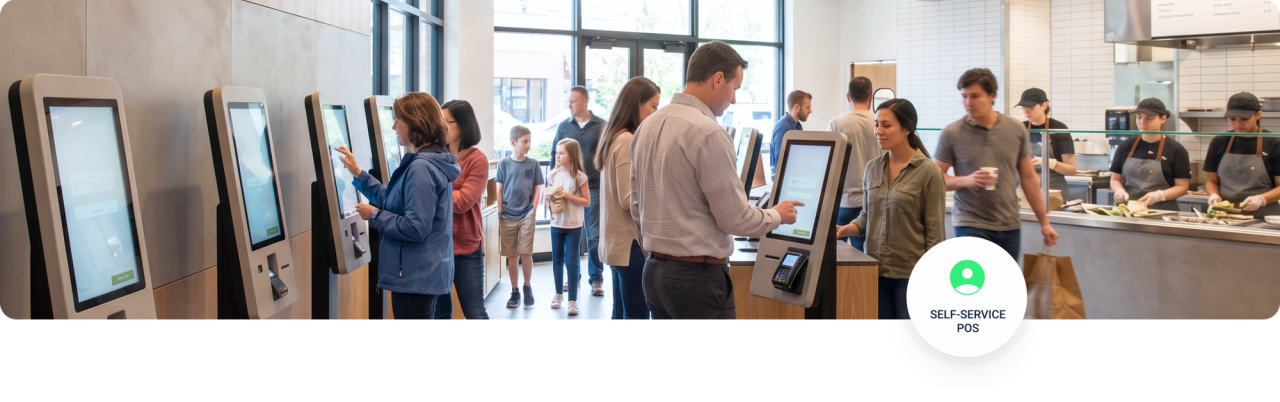
Self-service kiosks extend the point of sale directly to the customer, allowing ordering, checkout, product lookup, and loyalty interaction to occur without requiring staff assistance.
Modern kiosk platforms are integrated edge devices that connect to POS systems, payment platforms, loyalty systems, and cloud-based content management systems. They function as both a transaction device and a digital engagement platform, enabling guided selling, promotions, upsell workflows, and customer data capture. When deployed correctly, kiosks become part of the store's core technology architecture and serve as an additional revenue and customer engagement channel rather than just a replacement for a cashier.
Partners Behind Every Kiosk Deployment
From touchscreens and enclosures to payments and device management, Spencer aligns best-in-class partners into a unified self-service solution.
The Ecosystem
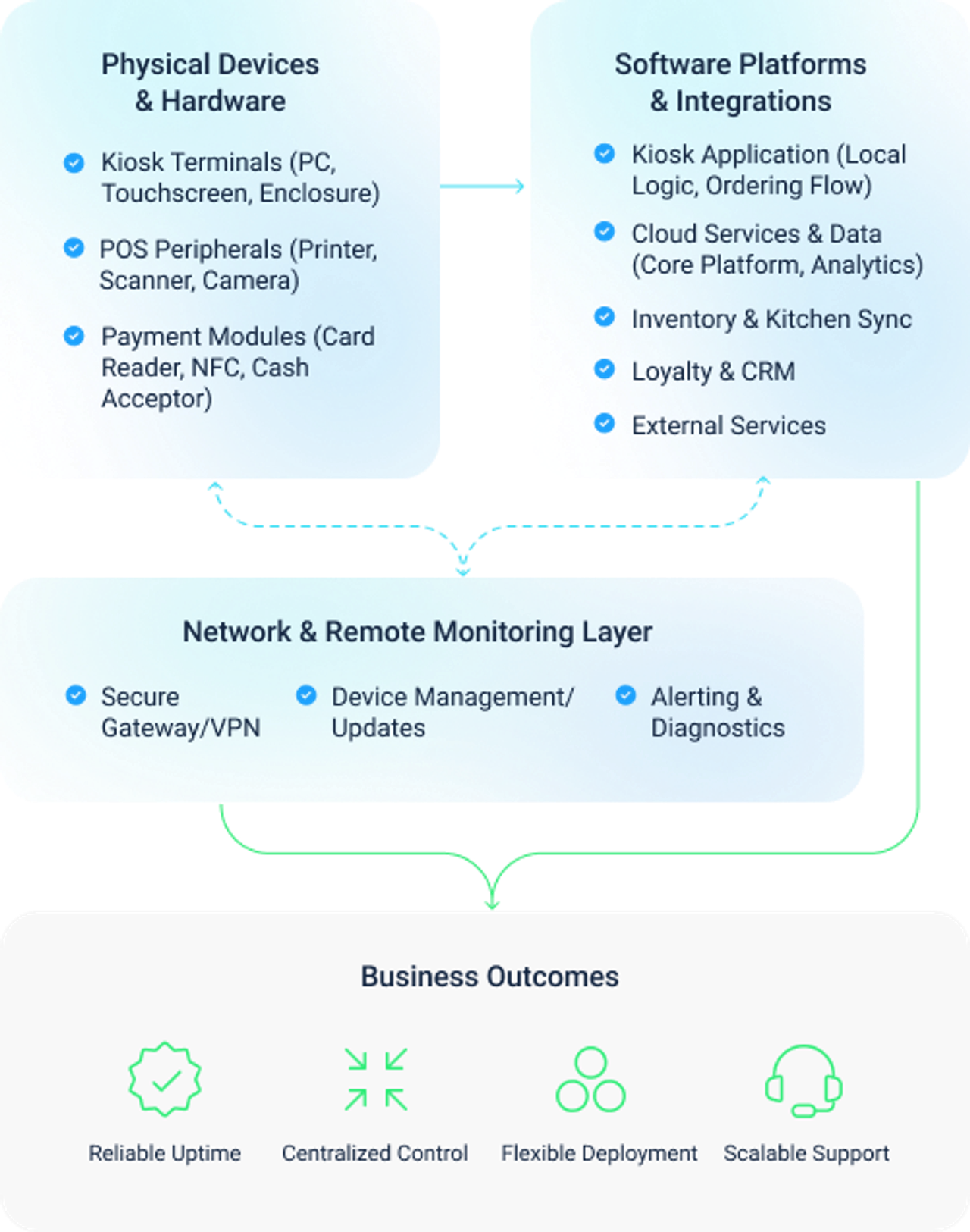
Self-service kiosks are built from a combination of commercial-grade components designed for unattended, customer-facing environments.
These deployments typically include commercial touchscreens from manufacturers such as Elo and iMin, mounted into durable metal kiosk enclosures from providers such as SpacePole, Havis, Elo, or iMin depending on the store environment and use case. Some kiosks utilize all-in-one touchscreen computers, while others use separate compute modules such as Intel NUC or HP platforms when a Windows or Intel-based architecture is required, or Android and Linux-based compute platforms when a lighter, locked-down environment is preferred.
Many kiosk environments also incorporate barcode or loyalty scanners from manufacturers such as Zebra to allow customers to scan loyalty apps, promotions, or products as part of the self-service workflow. For environments that require ADA compliance or alternative input methods, specialized accessibility devices such as tactile keypads and accessibility interfaces from manufacturers like Storm Interface can be integrated into the kiosk design. All devices are typically connected to remote monitoring and device management platforms, allowing software updates, health monitoring, and remote support to be performed without requiring on-site intervention.
The result is a modular, serviceable kiosk environment built from commercial components rather than a single-purpose machine.
Business Impact
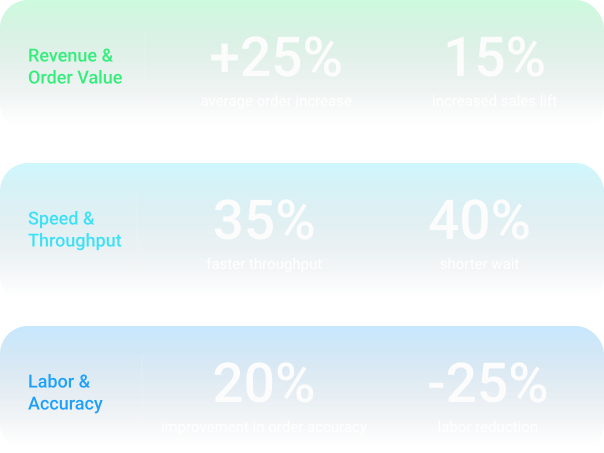
When deployed strategically, self-service kiosks produce measurable operational and financial benefits.
Many operators see increases in average order value ranging from 10 percent to 30 percent due to automated upsell prompts and visual menu presentation. Kiosks can increase peak hour throughput by 20 percent to 40 percent by reducing lines and allowing more customers to place orders simultaneously. Labor can be reallocated to food preparation, fulfillment, or customer service, often reducing front counter labor requirements by one to two employees per shift. Order accuracy typically improves by 15 percent to 20 percent because customers enter their own orders.
Over time, kiosks also generate valuable data on ordering behavior, product mix, and customer preferences, turning the ordering experience into a source of operational insight rather than just a transaction.
Why Spencer
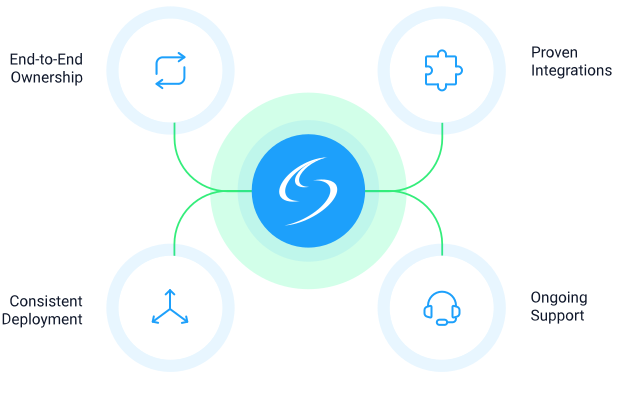
Deploying self-service kiosks at scale requires more than selecting hardware and software. It requires a partner that can source equipment, stage and configure devices, install and integrate them into the store environment, monitor and support them remotely, and manage repair, replacement, and refresh cycles over time.
Spencer Technologies supports the full lifecycle of self-service deployments, from initial rollout through ongoing support and eventual hardware refresh.
Because Spencer works across multiple hardware manufacturers, device platforms, and management systems, customers are not locked into a single ecosystem and can evolve their kiosk strategy over time while maintaining a consistent deployment and support partner across all locations.

Ready to Scale Self-Service?
Deploy kiosks that increase throughput, improve accuracy, and integrate cleanly into your store environment.