
Kitchen Automation & Display Systems
Digital order routing that keeps every kitchen station aligned and on pace.
The Business Problem
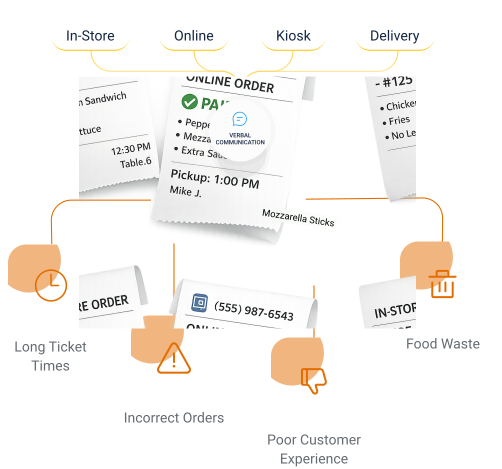
Restaurants, convenience stores, and food service operations are under constant pressure to improve speed of service, order accuracy, and labor efficiency while managing increasing order volume from in store, online, kiosk, and delivery channels.
Many kitchens still rely on paper tickets, verbal communication, or disconnected systems that make it difficult to manage order flow and production timing.
As order volume increases and fulfillment channels expand, kitchens can quickly become the operational bottleneck. Without the right systems in place, this leads to longer ticket times, incorrect orders, food waste, and poor customer experience.
The Solution
Kitchen automation platforms and kitchen display systems replace paper tickets and manual processes with digital order routing, production management, and real time visibility into kitchen operations.
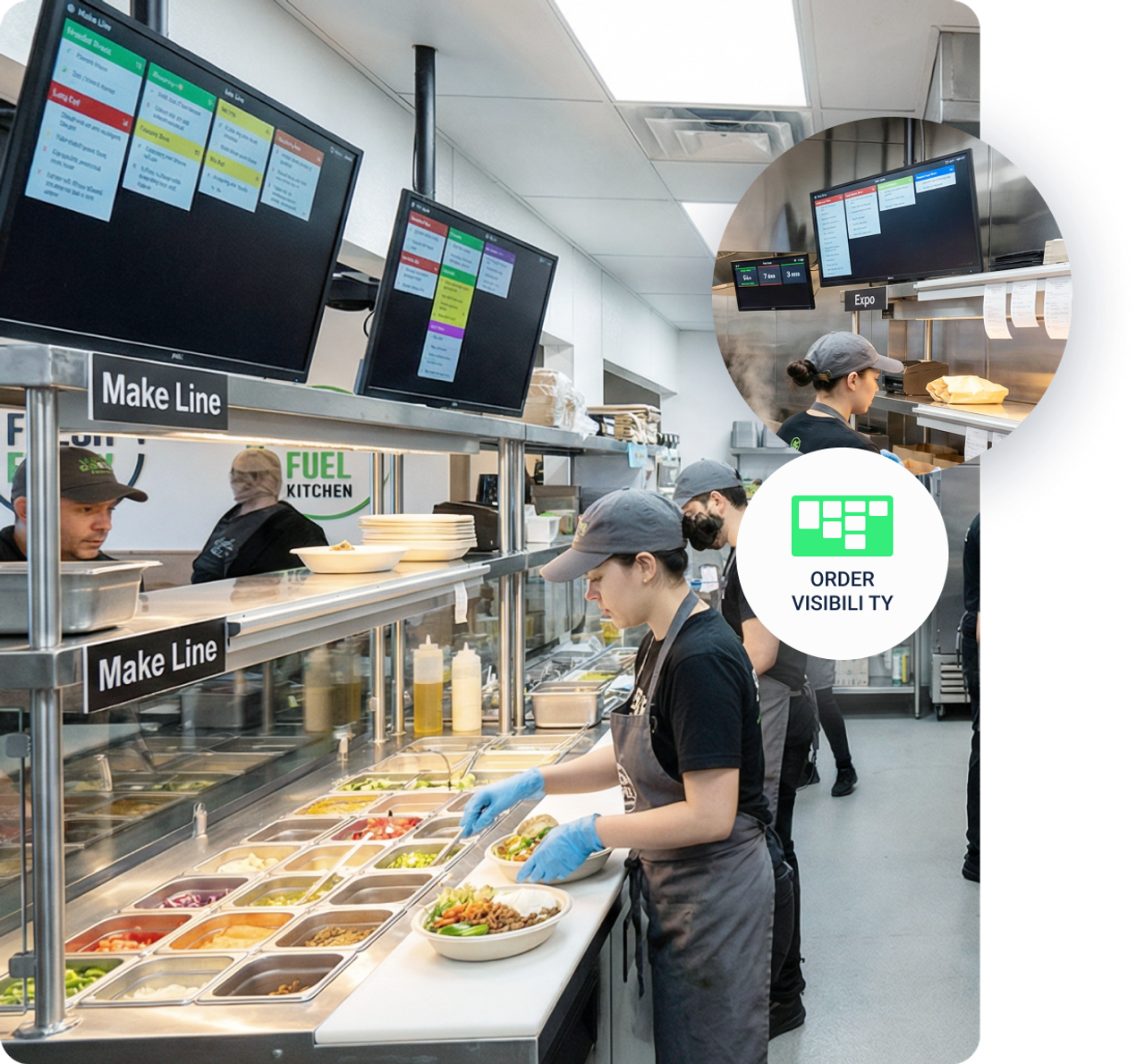
Orders from POS, online ordering, mobile apps, kiosks, and delivery platforms are routed to kitchen display screens where staff can see what to prepare, in what order, and how long each order has been in process.
These systems help manage production flow, coordinate multiple kitchen stations, and provide timing data that helps operators improve speed of service and staffing decisions. Kitchen systems can also manage order prioritization, routing to specific prep stations, and labeling for pickup and delivery orders.
Built with Trusted Partners
Spencer works with leading kitchen technology providers to deliver scalable solutions aligned to your POS systems, workflows, and real-world kitchen environments.
The Ecosystem
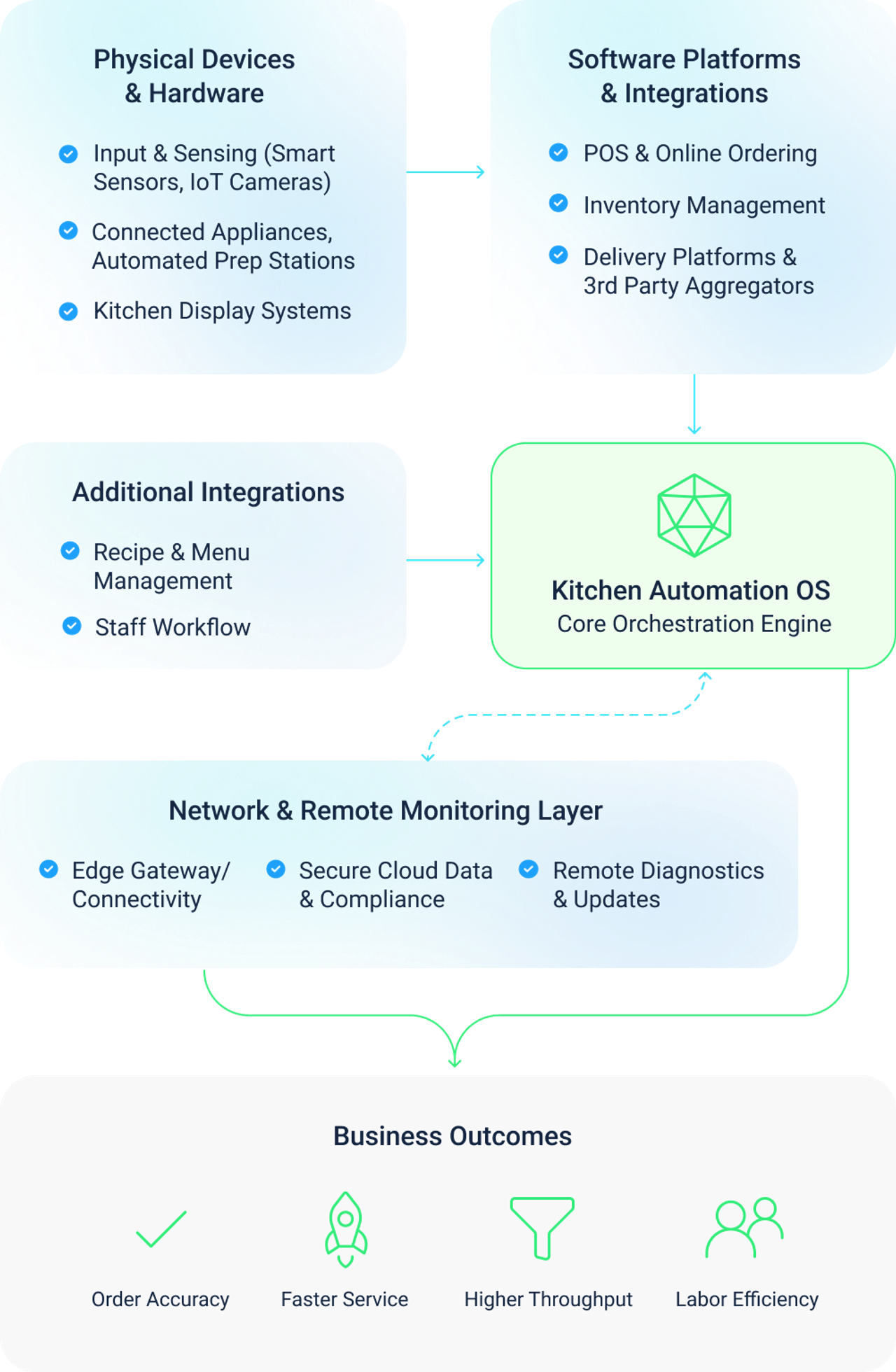
Kitchen automation environments typically include commercial grade touchscreens, kitchen display screens, bump bars or touch input devices, kitchen printers, and order routing software platforms.
Hardware from manufacturers such as Elo and Epson is designed for hot, humid, and high use kitchen environments and can be deployed as prep station screens, expo screens, and drive thru order management screens. Kitchen management software platforms route orders from POS and online ordering systems to the appropriate kitchen stations and track order timing and completion. Label printers and ticket printers are often integrated for order labeling, pickup, and delivery workflows.
These systems are connected to POS platforms and managed remotely to ensure consistent configuration and uptime across all locations.
- ORDERS MOVE WHERE THEY NEED TO GO.
- KITCHEN STATIONS STAY ALIGNED AND ON PACE.
- SYSTEMS STAY CONNECTED AND CONSISTENT ACROSS EVERY LOCATION.
Business Impact
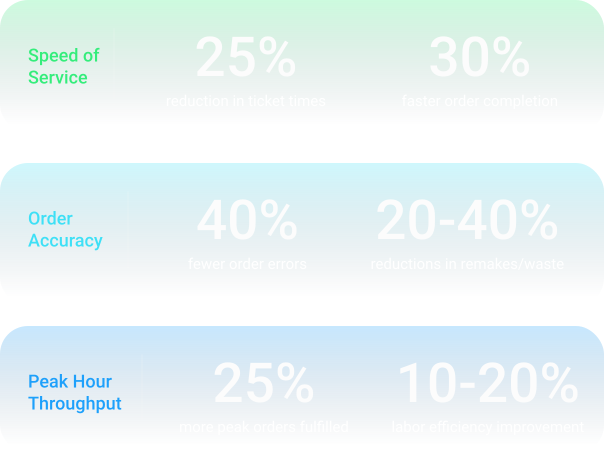
Kitchen automation and kitchen display systems deliver measurable improvements in speed, accuracy, and labor efficiency. Many operators see reduced ticket times and improved order accuracy because kitchen staff work from clear digital order queues instead of paper tickets.
Production data allows operators to measure ticket time, identify bottlenecks, and improve staffing decisions. Digital order routing reduces lost tickets and missed items, which improves customer satisfaction and reduces food waste.
Over time, kitchen automation provides operational data that helps organizations improve throughput, optimize labor, and support increasing order volume without expanding kitchen footprint.
Why Spencer
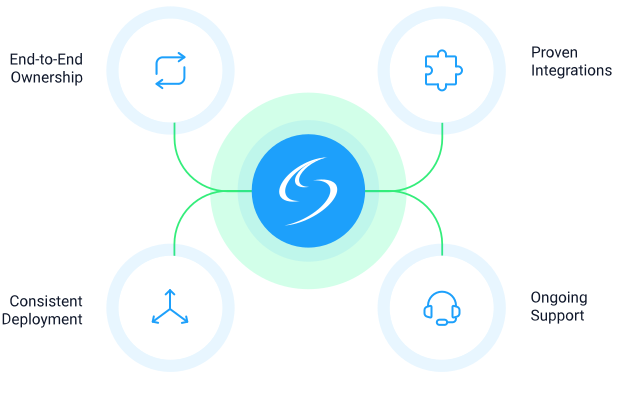
Deploying kitchen technology across multiple locations requires coordination between POS systems, online ordering platforms, network infrastructure, and kitchen hardware.
Spencer Technologies supports the full lifecycle of kitchen technology deployments, including hardware sourcing, staging and configuration, installation, integration with POS and network systems, and ongoing support and replacement.
Because Spencer supports multiple hardware and software platforms, customers can deploy kitchen automation solutions that fit their operational workflows while maintaining a consistent deployment and support partner across all locations.

Ready to Improve Kitchen Performance?
Deploy systems that streamline order flow, reduce errors, and support high-volume operations.