
RFID / Inventory Visibility
Turning periodic inventory counts into a live view of what you have and where it is.
The Business Problem
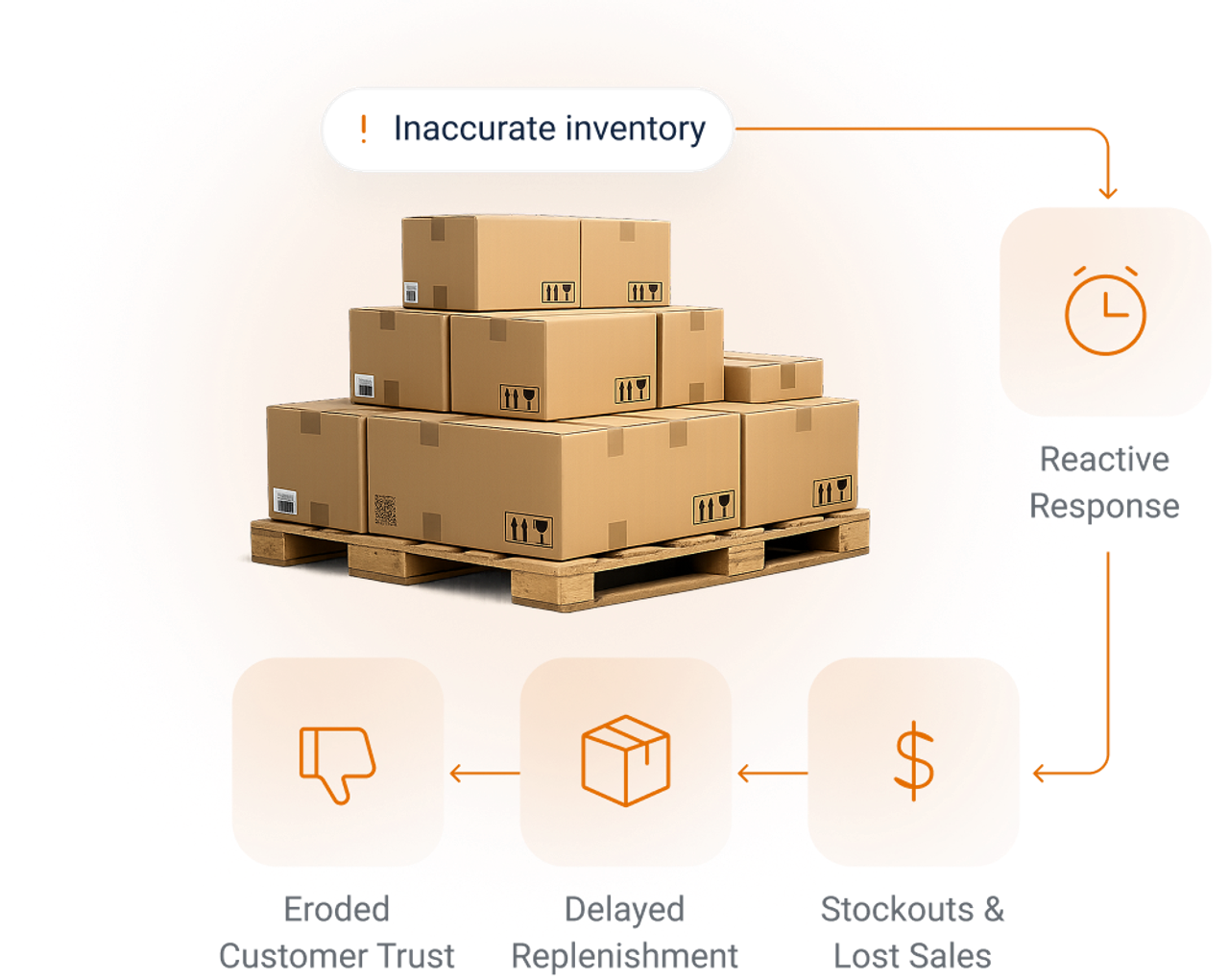
Retailers and hospitality operators cannot run modern omnichannel businesses on delayed, approximate inventory data. When store inventory is wrong, the impact spreads quickly across the operation. Associates waste time searching for product, replenishment happens too slowly, online availability becomes unreliable, and customers lose confidence in pickup promises and in-store product availability.
Traditional inventory processes, including barcode-based counts and periodic manual audits, create blind spots between counts. That leaves operators reacting to stockouts, shrink, and misplaced inventory after the damage has already been done.
In an environment where stores must function as both selling floors and fulfillment nodes, inventory accuracy is no longer just an operational metric. It is a revenue, service, and margin issue.
The Solution
Modern RFID solutions create item-level visibility by assigning a digital identity to individual products and capturing their movement across the store, stockroom, and supply chain.
The real value is not simply in reading tags. It is in turning those reads into a live operational data layer that supports replenishment, fulfillment, cycle counting, loss detection, and location awareness.
As RFID platforms have matured, the model has expanded beyond handheld counting into software-driven ecosystems that combine fixed infrastructure, overhead readers, portals, analytics, and enterprise integrations.
That allows retailers to move from periodic inventory snapshots to a more continuous understanding of what inventory they have, where it is, and whether it is available to sell, move, or fulfill.

Partners That Power RFID Visibility
Spencer works with leading RFID hardware, platform, and software partners to deliver proven, scalable inventory visibility solutions across retail environments.
The Ecosystem
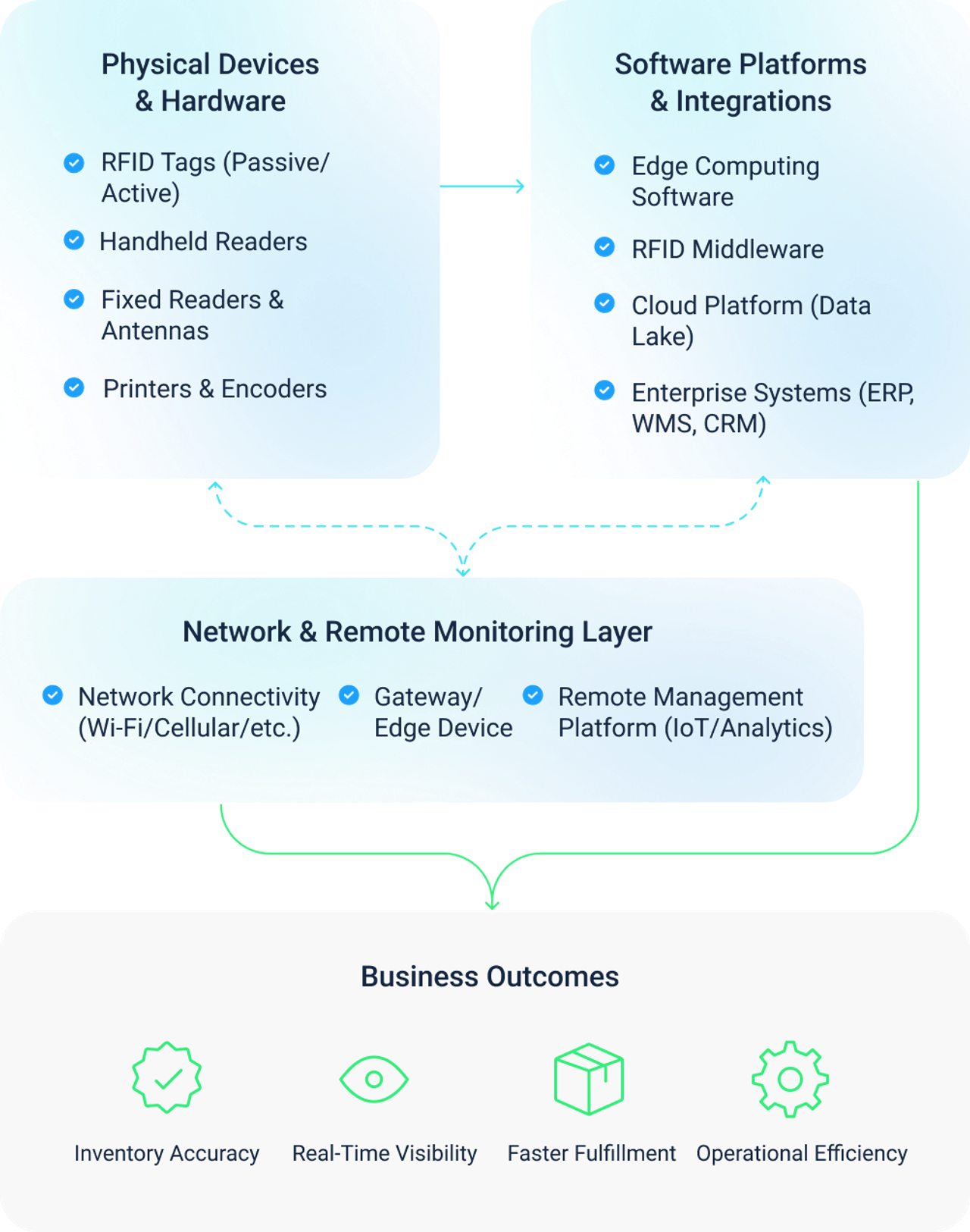
RFID environments are built from a connected ecosystem of tags, readers, antennas, edge devices, and software platforms. Item-level tagging often starts with inlays and labels from providers such as Avery Dennison and chip platforms from companies such as Impinj, which form the data foundation for retail RFID programs.
From there, retailers can deploy a mix of handheld readers, fixed readers, overhead systems, transition portals, and real-time location architectures depending on the use case. Platforms from companies such as Nedap, Keonn, goRadar, and PervasID illustrate how the market now spans multiple operating models, from high-scale inventory visibility and unified commerce platforms to overhead location tracking, autonomous inventory capture, transition monitoring, and store-level intelligence.
The software layer is equally important. It is what turns raw reads into usable business signals, connecting RFID events into inventory systems, fulfillment workflows, replenishment logic, and analytics that merchants and operators can actually act on.
Business Impact
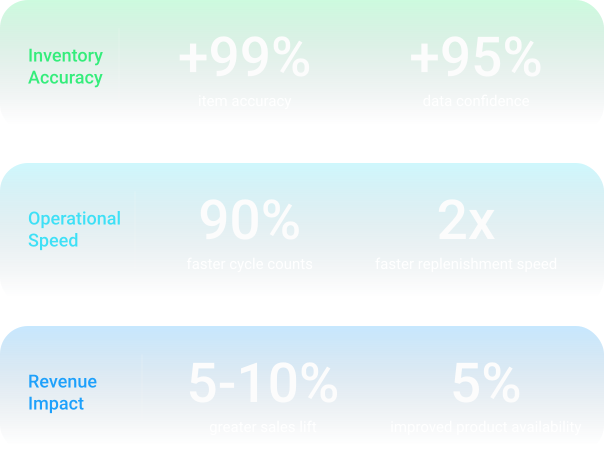
Done well, RFID improves both accuracy and speed. Leading retail deployments position item-level RFID as a path to inventory accuracy above 98 percent, while also making counts dramatically faster than traditional manual methods.
That improved accuracy supports better on-shelf availability, more reliable buy online pick up in store and ship-from-store workflows, and stronger confidence in store level inventory across digital and physical channels. It also reduces time spent searching for missing product, shortens replenishment cycles, and gives operators earlier visibility into shrink or process breakdowns.
In more advanced deployments, real-time location and continuous read architectures can support live stock visibility, smarter merchandising decisions, and faster exception handling. Some vendors also point to observed sales uplift in the 5 percent to 10 percent range when improved visibility reduces stockouts, markdown pressure, and missed demand.
The larger strategic value is that RFID turns inventory from a lagging record into a live operating system for the store.
Why Spencer
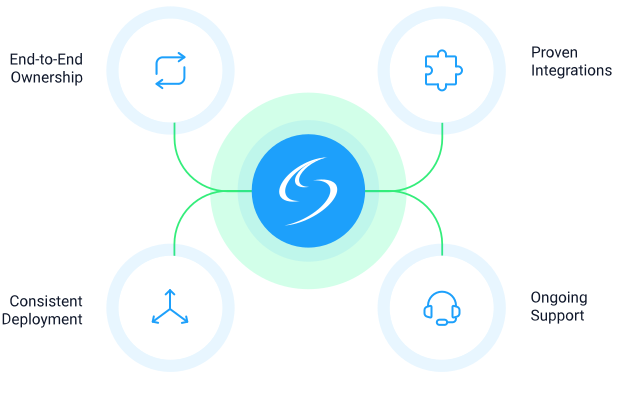
RFID success depends on more than selecting a reader or a tag standard. It requires a deployment and support model that can connect the technology to real store operations. Spencer Technologies helps customers translate RFID strategy into field-ready execution through hardware sourcing, staging and configuration, site deployment, ongoing support, and lifecycle management. Because Spencer operates across multiple store technologies and supports broader retail infrastructure, RFID can be implemented as part of a larger store modernization strategy rather than as a standalone experiment. That matters when RFID data needs to support fulfillment, store operations, device ecosystems, and long-term refresh planning across a distributed retail environment.

Ready for real-time inventory visibility?
Turn inventory into a live operating system with RFID solutions built for scale.