
Modern POS
Transforming store checkout with cloud-connected POS terminals and mobile registers.
The Business Problem
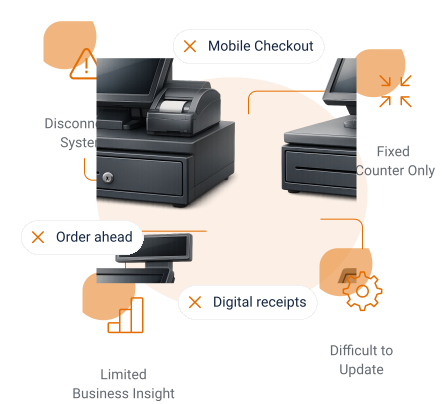
For many retailers and restaurant operators, the point of sale has historically been a fixed terminal at a counter, primarily used to complete a transaction.
That model no longer matches how modern stores and restaurants operate. Businesses now need to support mobile checkout, order ahead, loyalty programs, real time inventory visibility, digital receipts, promotions, and integrated reporting across multiple locations. Legacy POS systems were often store specific, server based, and difficult to update, which made innovation slow and operational visibility limited.
Today, the point of sale is no longer just where a transaction happens. It is the system that manages orders, payments, customer engagement, reporting, and operational workflows across the entire business.
The Solution
Modern POS platforms are built as connected software platforms that manage transactions, menus or product catalogs, pricing, promotions, loyalty programs, employee permissions, reporting, and integrations into other business systems.
These platforms are typically cloud connected, which allows software updates, menu changes, and pricing updates to be deployed across all locations quickly and consistently. From an operational standpoint, modern POS software also provides real time reporting on sales, product performance, labor utilization, and store level performance. This allows operators to make faster and more informed decisions.
The hardware in a modern POS environment is the physical interface that enables the software to operate reliably in a store environment, but the long term value is driven by the software platform that manages the business and provides visibility across the organization.
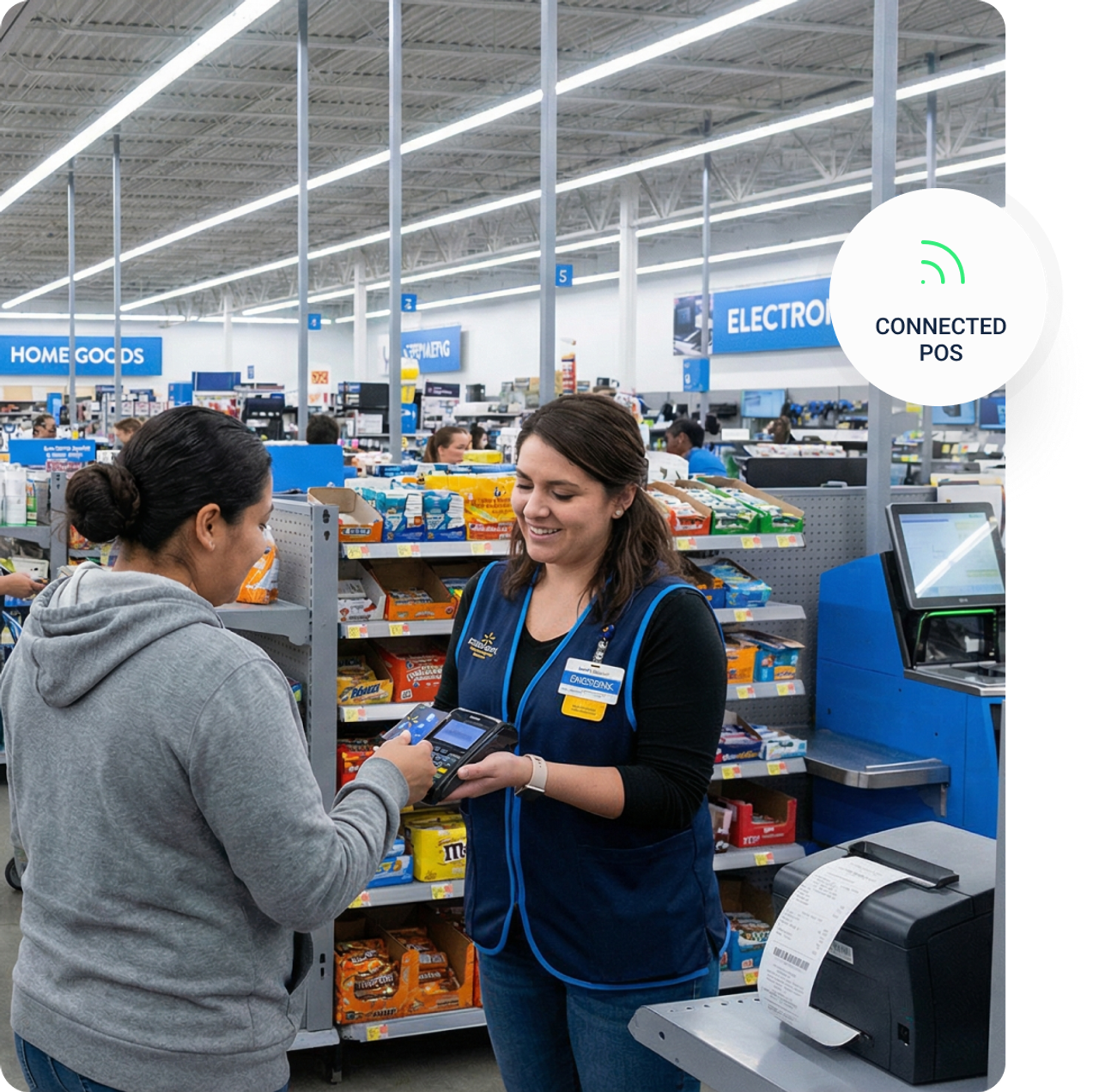
Trusted POS Partners
Spencer works with leading POS software and hardware partners to deliver reliable, scalable solutions tailored to each environment.

Zebra Technologies
Explore Solution →
The Ecosystem
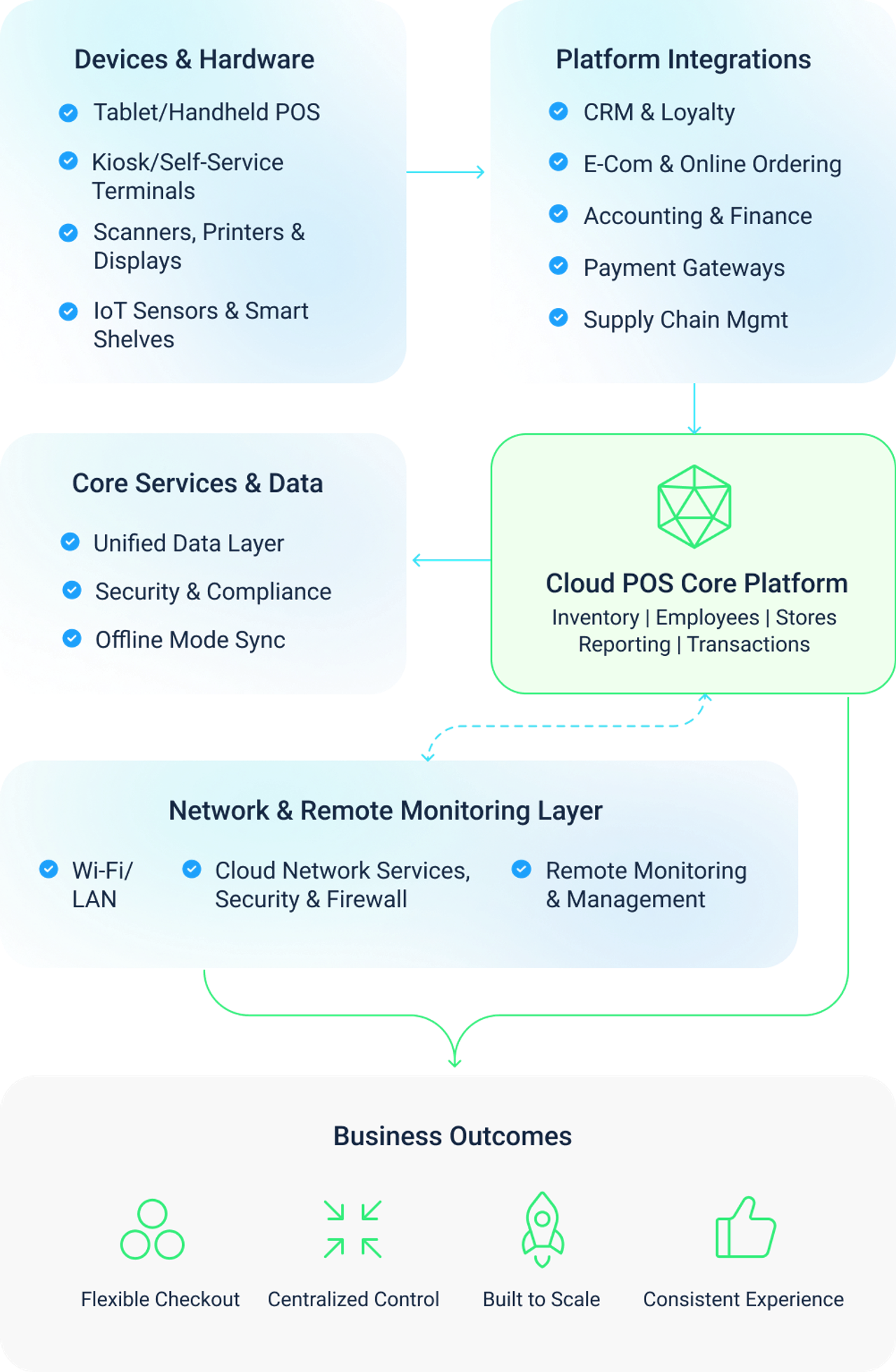
Modern POS environments are built from a combination of commercial grade touchscreens, mobile tablets, fixed POS terminals, scanners, cash drawers, receipt printers, and customer facing displays.
Hardware platforms from manufacturers such as Elo, HP, Toshiba, and iMin support operating systems including Windows, Android, and Linux, allowing businesses to select the architecture that best fits their POS software platform and security model. Some environments utilize traditional fixed POS terminals at a counter, while others deploy tablet based POS for mobility and line busting.
Barcode scanners, often from manufacturers such as Zebra, are used for product scanning, inventory lookup, and assisted selling workflows. These devices are typically connected to cloud based POS software platforms and managed through device management and remote monitoring tools so that software updates, security patches, and device health can be managed centrally across all locations.
The result is a flexible POS environment that can support fixed checkout, mobile checkout, and self service devices within the same technology ecosystem.
Business Impact
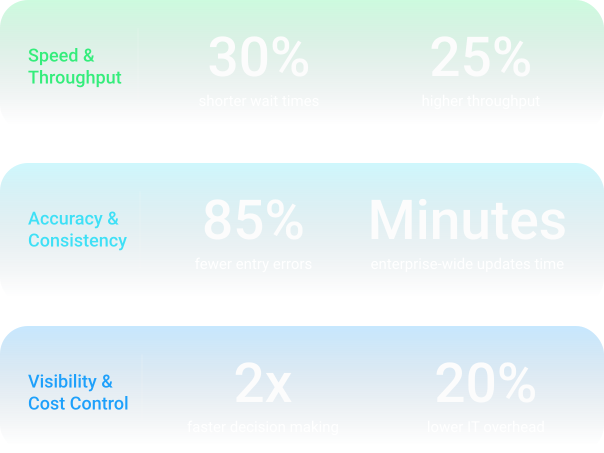
Modern POS platforms deliver value primarily through operational visibility, consistency, and flexibility. Many organizations see faster transaction times and improved throughput during peak hours due to better user interfaces and mobile checkout capabilities.
Cloud based POS platforms allow pricing, promotions, and menu updates to be deployed across all locations in minutes instead of days, improving consistency and reducing administrative effort. Real time reporting provides visibility into sales trends, product performance, and labor utilization, allowing operators to make faster business decisions.
Over time, organizations often see lower total cost of ownership due to centralized management, fewer on site servers, simplified software updates, and standardized hardware platforms that are designed for commercial use and longer lifecycle support.
Why Spencer
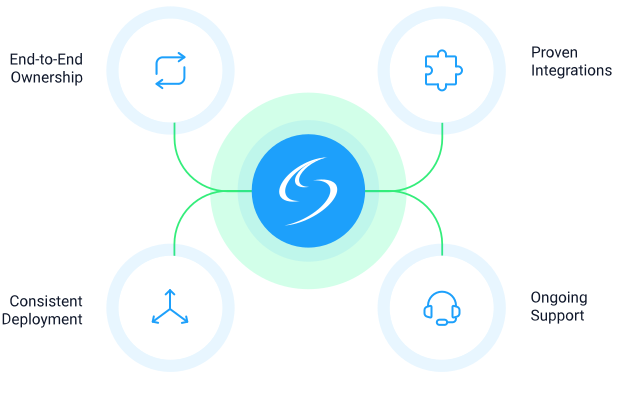
Selecting a modern POS platform is only part of the process. Multi location businesses must be able to deploy, support, and maintain POS hardware and devices across all locations in a consistent way.
Spencer Technologies supports the full lifecycle of POS environments, including hardware sourcing, staging and configuration, site installation, device management, help desk support, repair and replacement, and technology refresh projects. Because Spencer supports multiple hardware platforms and operating systems, customers are not locked into a single hardware manufacturer and can evolve their POS environment over time.
Spencer's role is to ensure that the POS environment is deployed consistently, remains supportable over time, and can scale as the business grows.

Is Your POS Built to Scale?
Deploy and support POS systems that keep every location running consistently.